
Practical guide
Build a location-by-vehicle fleet RFP matrix
Connect each vehicle group with a real location, scope and responsible contact before requesting comparable proposals.
Read the guide: Build a location-by-vehicle fleet RFP matrixCommercial fleet project planning
Bring vehicles, locations and brand requirements into one useful brief. Confirm local arrangements before planning the wider rollout.
Guaranteed response within 2 hours.Free planning tools and buyer downloads below.
A clear scope before the spend.
Free distributed fleet rfp builder below. Use the result with any wrap shop.
More useful project detail
Give every proposed location the same requirements while keeping local vehicles, responsibilities and unconfirmed arrangements visible.

A visual you can keep
Describe requested work without assuming local arrangements are confirmed.
Use the planning example from Chicago Fleet Wraps, download a copy, or read the related project guides.
Practical guide
Connect each vehicle group with a real location, scope and responsible contact before requesting comparable proposals.
Read the guide: Build a location-by-vehicle fleet RFP matrixPractical guide
Specify who provides files, approves proofs, handles vehicles and receives completion records at each location.
Read the guide: Map responsibility across a distributed wrap projectPractical guide
Keep every location response, excluded item and proposed variation visible beside the requested baseline.
Read the guide: Compare distributed fleet bids without losing local exceptionsPicture the possibilities
Look at the message, the coverage and the working views.
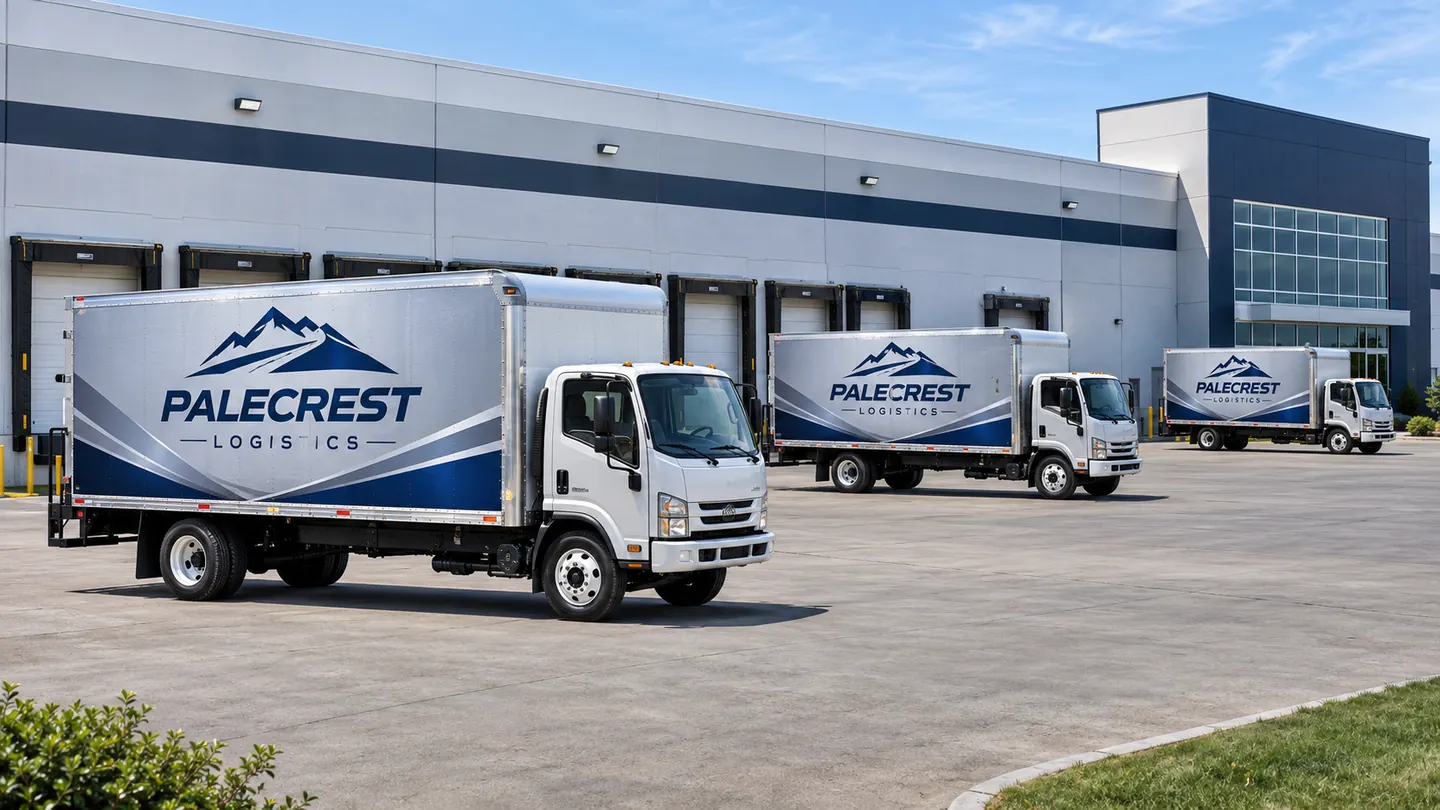
Palecrest Logistics is a fictional business. These generated design concepts illustrate ideas to discuss for your vehicles.
Plan the graphics for your vehiclesWhy put your business on a vehicle?
Share one approved message, coverage description and vehicle reference.
Record contact details, body variants and responsibilities by location.
Review installation, movement and scheduling responsibilities for each market.
A clear scope before a price
Vehicle size, covered areas, artwork, preparation, existing graphics and the proposed material system all belong in the price discussion.
Useful when the priority is a clear name, service and contact route.
Discuss this scopeCompare the exact panels, message and finish with the full-coverage option.
Discuss this scopeConfirm the included painted panels and any exclusions on the actual vehicle.
Discuss this scopeRequest a price for the actual vehicles and agreed coverage. The free tools below help you compare the assumptions.
Let’s talk vehicles
Tell us how many vehicles you have. We’ll follow up about the vehicles, coverage, design and timing.
Guaranteed response within 2 hours.Know the next step
Guaranteed response within 2 hours. Final project pricing and dates follow review of the scope.
Name, email, phone and vehicle count. Share the project context through the free tool if it is useful.
Discuss the actual vehicles, coverage, artwork, existing graphics and timing.
Check the written scope and vehicle-specific artwork, including the business wording and included surfaces.
Confirm scheduling, preparation, review and the applicable care information.
The free tool
Use the example values to explore, then replace them with your project details.
One group per line: location | count | vehicle type | coverage | installation responsibility
Use the tool without sharing contact details. Entering a valid email or phone in the inquiry form saves your project entries, filenames, analysis and selected original files, even if unfinished. Original files: up to 50 MB each and 200 MB per batch.
Example Service Co.
| Location | Vehicles | Body type | Coverage | Install responsibility |
|---|---|---|---|---|
| Branch A | 6 | Service vans | Full wrap | Confirm locally |
| Branch B | 4 | Box trucks | Sides and rear | Confirm locally |
A draft procurement document. No locations, installation capacity or nationwide appointments are implied.
Ready to discuss the vehicles? Get fleet pricing. Save your result to use in that conversation.
Free tools for a better buying decision
A 12-page workbook with generic wrap concepts and fillable worksheets for coverage, quote comparison, budget, fleet availability, artwork, proof approval and vehicle records. Use it with any wrap shop.
Fill it in electronically or print it. No email needed.
Take this to any wrap shop
Print it off so you remember to ask. A practical checklist covering scope, materials, artwork, preparation, scheduling, warranty and handoff, plus questions for this project.
Confidence comes from the details
Use these checks when you review a proposal, a proof or a wrap shop. Keep the answers with your project.
Print the wrap-shop questionsSee the tradeoff
Two branches with different vehicle types get separate requirements instead of one total fleet count.
Illustrative values, not a completed customer project.
Example Service Co.
| Location | Vehicles | Body type | Coverage | Install responsibility |
|---|---|---|---|---|
| Branch A | 6 | Service vans | Full wrap | Confirm locally |
| Branch B | 4 | Box trucks | Sides and rear | Confirm locally |
A draft procurement document. No locations, installation capacity or nationwide appointments are implied.
Leave with something useful
Put each location, vehicle group and installation responsibility into a usable request for proposals.
Build my fleet RFPBuild it from the project details you enter.
Keep the assumptions and open questions visible.
Copy, save or print the result for your next conversation.
Commercial wrap service
For a distributed fleet wrap inquiry, build a vehicle inventory by location, identify shared artwork requirements, and list the service arrangements that need confirmation. Keep assumptions about installation coverage out of the brief. Ask which locations, vehicle groups, and coordination responsibilities can be included in the proposed scope.
A fleet that works from several locations needs a brief that separates shared decisions from local details. Vehicle configurations, contact information, existing graphics, and availability may vary even when the logo stays the same. This page helps a central buyer gather those differences before discussing a commercial graphics project. It is a planning resource, not a statement that installation is available in every market. Locations and service arrangements need to be confirmed for each proposed project.
Group vehicles using information that affects the project rather than a single fleet total. Record where each group is based, its make and body configuration, existing graphics, and any special equipment. Include approximate counts while clearly marking items that still need verification. A central inventory is especially useful when local managers use different names for the same vehicle type. Keep supporting photos connected to the correct group. This allows questions about a particular location or configuration to be answered without repeatedly rebuilding the whole list.
Identify the artwork elements that should remain consistent and the details that may differ by location. A business might share its logo and service description while using different local contact details or unit identifiers. Record who has authority to approve each type of change. Avoid creating local artwork versions before the underlying rules are agreed. A clear distinction between shared identity and permitted variation helps the conversation address both brand consistency and the operational details that matter to individual vehicle groups.
Treat installation location, vehicle transport, scheduling, and local coordination as questions to resolve. A domain with national wording does not establish available geographic coverage or a network of facilities. Share the markets involved and ask which project arrangements can be discussed. Identify whether vehicles can travel, whether availability differs by location, and who would coordinate drivers. Keep these details visible in the scope rather than assume every site follows the same process. Proposed arrangements should be confirmed before local teams plan around them.
Buy with the questions answered
No. Supply the vehicle locations and proposed scope so available arrangements, responsibilities and timing can be confirmed for each part of the project.
Guaranteed response within 2 hours. The next conversation confirms the vehicle details, proposed coverage, artwork, existing graphics and timing so a project-specific scope can be discussed. Sending an inquiry does not reserve an installation date.
Review the covered surfaces, final business wording, vehicle-specific artwork, proposed material system, preparation and removal needs, price exclusions and agreed handoff. The free wrap-shop questions give you a record to use with any supplier.
Before you decide
For project-specific help, use the four-field inquiry form.
Get fleet pricingNo. This page helps a business organize requirements for a distributed fleet inquiry. It does not establish nationwide installation coverage or local facilities. Share the actual locations involved and ask which vehicle groups and service arrangements can be considered for the proposed project.
Read the detailed guide: Build a location-by-vehicle fleet RFP matrix
Include those requirements in the brief and identify which details must vary. Verify each phone number, website, or local identifier with the responsible team. The artwork discussion can then distinguish approved local variations from changes that would affect the shared identity of the fleet.
Read the detailed guide: Compare distributed fleet bids without losing local exceptions
Start with the information you can verify and clearly mark the remaining gaps. Give each vehicle group a consistent name, location, and count status. This makes an early discussion possible without presenting an estimate as a confirmed scope or hiding differences between participating locations.
Read the detailed guide: Build a location-by-vehicle fleet RFP matrix
Choose a central contact who can collect vehicle information and consolidate brand decisions. Also identify local contacts for availability and vehicle access. Those roles may belong to different people, so explain their responsibilities rather than expect one person to answer every operational question immediately.
Read the detailed guide: Map responsibility across a distributed wrap project
Carry common colors, typography and messages across the fleet, then adapt placement to each vehicle. A layout that works on a trailer may need substantial changes on a cargo van.
3M sourcePreparation, coverage, vehicle shape, existing graphics and the installation team affect downtime. Obtain a project-specific schedule before committing vehicles to a fleet rollout.
3M sourceContamination and trapped moisture can undermine adhesion. Seams, crevices and areas beneath seals need attention as part of the final cleaning and drying process.
ORAFOL sourceA damaged graphic may be assessed by complete component. Weathered material can differ in color and gloss from new prints, so a replacement panel should be reviewed alongside the remaining graphics.
3M sourceFor fleets operating in multiple markets, provide the proposed vehicle locations and confirm available service arrangements before planning a rollout. Tell us about your vehicles.